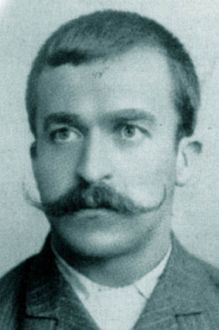
Birth: NULL/NULL/1878 Death:NULL/NULL/1953
Born in Jerusalem on 23 Jan. 1878 to a Palestinian Greek-Orthodox family; attended an Orthodox school, then continued at the English Zion College in Jerusalem; failed as businessman in America and returned to Palestine when the Young Turks Revolt broke out around 1908; started an evening school for Arabic language education in Jerusalem; founder and head of several schools in Jerusalem (e.g., Dusturiyya School in 1909, Wataniyya School in 1925, An-Nahda College in 1938); moved to Damascus during WWI; in 1913, led a movement to reform and Arabize the Greek Orthodox Church in Palestine and wrote a pamphlet entitled “The Orthodox Renaissance in Palestine”, which led to his excommunication; joined the Arab Revolt in 1917; was appointed head of the Jerusalem Teachers College in 1919; served as principal of an Orthodox school in Cairo from 1920-22; became Secretary of the Congress of the Arab Executive Committee of Palestine, held in Jaffa in June 1923; worked as Inspector of the British Mandate’s Palestinian Education Dept., responsible for public education in 1926; worked as Director of the Arabic program in the Palestinian Radio from Jan. 1926; escaped from the Qatamon neighborhood in West Jerusalem during the 1948 Nakba just before the city fell and sought refuge in Cairo where he was nominated by the Egyptian writer Taha Hussein to join the prestigious Arabic Language Academy; published works on education, poetry, and literature, as well as political essays focusing on Arab national issues; is especially remembered for his books on teaching Arabic for beginners; passed away on 13 Aug. 1953 in Cairo, Egypt; his daughters Hala and Dumya published his memoirs under the title Such am I, O World in 1955; in 1996, the Khalil Sakakini Cultural Center was founded in a restored traditional mansion in Ramallah to preserve and continue his legacy through the promotion of arts, culture and education; the center published his diaries in two volumes in 2003 and 2004 as well as an abridged full collection in 2005.